#Why Savvy Investors Are Using Prediction Markets to Hedge Portfolios
#Introduction
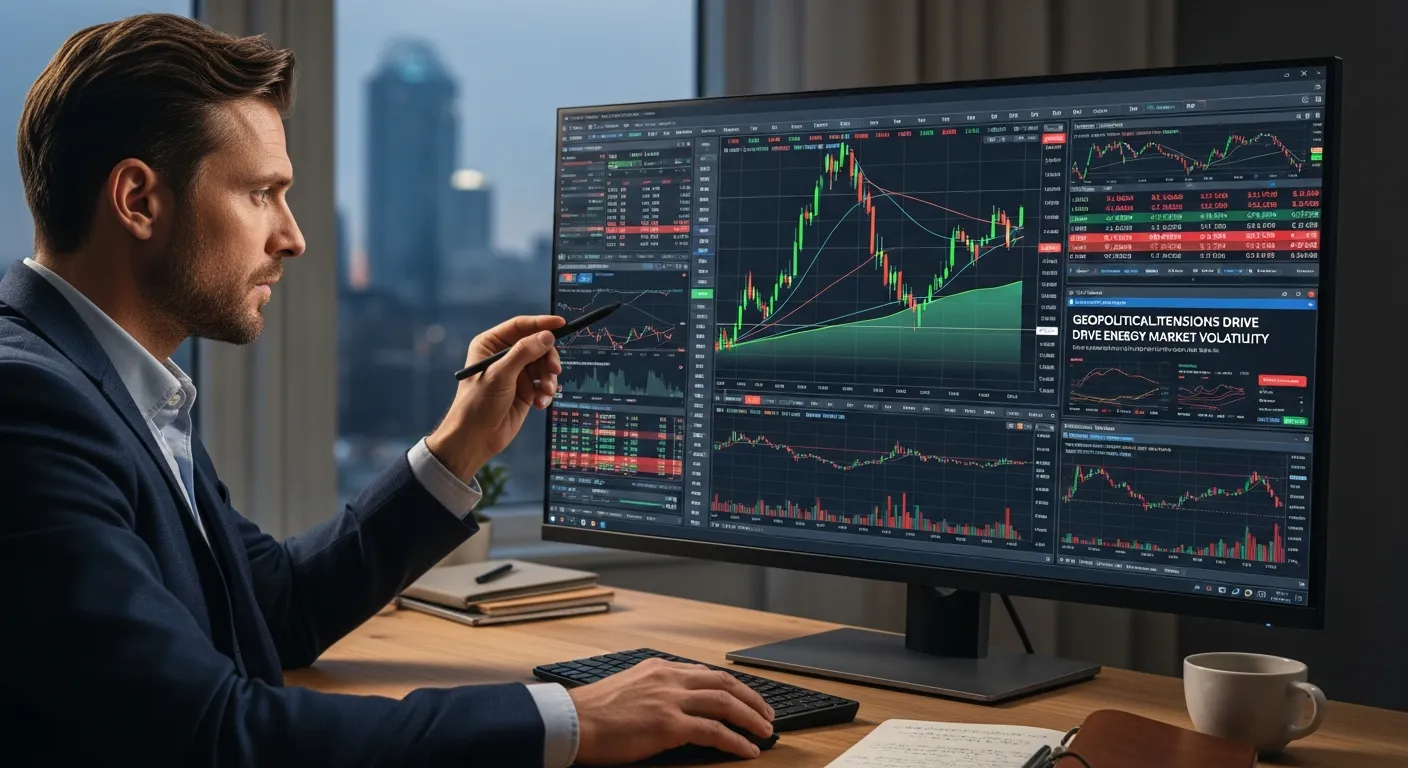
In a dimly lit London flat, a portfolio manager we’ll call “Elena” watched two screens with equal, calculated intensity. On one, the S&P 500 futures were sliding on whispers of a hawkish Fed pivot. On the other, a sleek interface on Polymarket showed the odds of a 50-basis-point rate hike in March collapsing from 72% to 41% in under an hour. She had just spent $50,000 of her personal capital not on puts or calls, but on a simple “No” share for that very event. It wasn’t a bet; it was a hedge.
The global prediction market industry, once a niche corner of the internet, has exploded in scale and complexity. For a growing cohort of savvy investors, these markets are no longer a curiosity — they are becoming a vital macro-sentinel. Yet this utility is shadowed by profound regulatory risk and novel trading hazards, raising a central question: is this sustainable innovation or a high-stakes gamble invented on the fly?
#From Parlor Bets to Macro-Sentinel: The Prediction Market Evolution
Long before blockchain, the urge to price the future fueled London parlour bets on elections — a crude precursor to today’s digital markets. The first digital incarnation arrived in the 1980s with the Iowa Electronic Markets (IEM), which consistently outperformed traditional polls.
Blockchain ignited the revolution. Augur’s launch in 2014 introduced decentralized prediction markets, settling markets via token-holder consensus rather than central arbiters. Over time, more user-friendly platforms like Polymarket and Kalshi began attracting institutional players and retail investors alike, shifting focus from trivia to questions with real financial impact.
#Related Reading: iGaming & Blockchain Innovation (Micro Hub)
Azuro vs WINR Protocol: The Battle to Become the “Uniswap of Betting”
No-KYC Crypto Casinos: The Privacy-First Revolution in iGaming
#How Prediction Market Hedging Works: A Step-by-Step Guide
At its core, a prediction market is a binary options exchange. For any event with a yes/no outcome (for example, “Will the Fed cut rates in June?”), the market creates two shares: “Yes” and “No.” These shares trade between $0 and $1. The current price reflects the crowd’s implied probability of that event occurring.
Consider an investor heavily exposed to growth stocks. A surprise rate hike could devastate their portfolio. Instead of broad put options, they can buy targeted contracts on Kalshi that pay out if the specific rate decision happens. This precisely offsets the catalyst risk without hedging the entire market — a tailored form of insurance.
Another example: a large holder of XRP might buy “No” shares on Polymarket tied to a negative court ruling. If the judgment arrives, their digital assets suffer, but the prediction market position pays out — softening the blow.
#The Canary’s Song: Real-Time Signals from the Crowd
Beyond hedging risk, prediction markets offer real-time intelligence that can act as early warnings for geopolitical or economic shocks.
For example, during UK political turmoil, a Polymarket contract on whether Prime Minister Rishi Sunak would lose power saw its implied probability jump long before mainstream headlines captured the story. Similarly, Kalshi markets tied to U.S. debt ceiling negotiations spiked sharply, signaling market fragility.
These price movements aren’t just numbers — they reflect the informed actions of thousands of participants. Some traders debate liquidity and noise, but many investment desks now monitor these markets as part of their risk dashboard.
#The Regulatory Minefield: Innovation on Shifting Sands
Prediction markets sit in a patchwork of legal uncertainty. In the U.S., Kalshi’s designation as a CFTC-regulated Designated Contract Market was a watershed moment, but it doesn’t fully settle broader questions about prediction markets as financial instruments, gambling, or something else.
Globally, regulators lag. The European Union’s crypto framework (MiCA) provides little clarity on prediction markets, leaving interpretation to national authorities. In the UK, gambling regulators emphasize consumer protection and may treat political markets as games of chance.
This fragmentation is the greatest threat to mainstream adoption. An investor can’t build a long-term hedging strategy on platforms that might be outlawed tomorrow.
#Related Reading: Crypto Betting Trends & Market Structure (Micro Hub)
Crypto Betting in India: What Investors and Players Should Know
Crypto Betting in 2026: How Faster Settlement and Stablecoins Are Rewriting the Odds
How Blockchain Is Transforming Online Gambling: Faster Payouts & Provable Fairness
#The Perils of the New Frontier: Risks Beyond Regulation
Even if legal clarity emerges, prediction markets carry unique hazards:
• Counterparty & Smart Contract Risk: Decentralized platforms rely on code, not regulated clearinghouses. Bugs or oracle failures can wipe out capital.
• Manipulation & Insider Trading: Thin markets can be moved by well-funded actors with privileged knowledge.
• Psychological Risk: Easy access and real-time political drama can blur hedging and speculation — potentially leading to addictive behavior and poor choices.
#The Future of the Sentinel: AI, Institutions, and a New Asset Class
Despite challenges, trends suggest growth. Some funds now allocate small risk-management budgets to prediction markets. AI tools are being used to interpret news and sentiment to inform trades, enhancing these markets’ role as informational aggregators.
In the long run, prediction markets could be recognized as a unique asset class — pricing isolated event risk much like equities price ownership risk or bonds price credit risk.
#Conclusion
Back in her London flat, Elena’s hedge worked. The Fed pivoted dovishly, her Polymarket “No” shares surged, and her losses in other parts of her portfolio were offset. For her, this was not gambling — it was risk management.
Prediction markets offer a way to isolate and manage specific, unpredictable shocks that can derail even the most careful strategies. But they also come with serious warnings: untested tech, uncertain laws, and behavioral risks. For disciplined investors, they can be powerful tools. For hobbyists chasing thrill, they can easily become traps.
In the market for the future, you must always weigh the odds before you ante up.