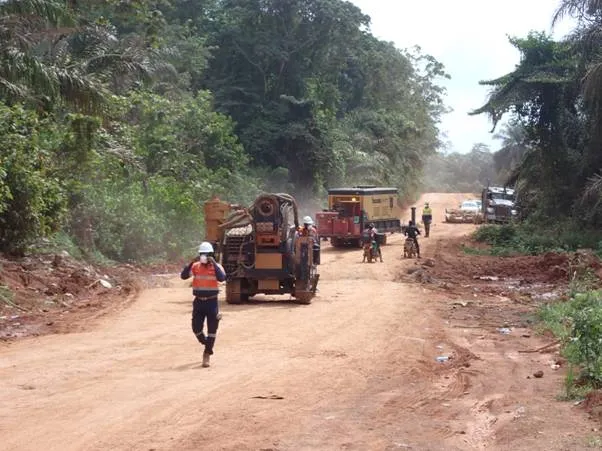
Hamak Strategy (LSE: HAMA) (OTCQB: HASTF) has begun a reverse circulation (RC) drilling program at its Akoko gold project in southwest Ghana, the company said April 15. The program will provide data for a mineral resource estimate and early-stage economic studies.
The company said the campaign will include 72 drill holes totaling approximately 4,125 meters across two primary target areas at Akoko. The drilling is focused on oxide gold mineralization within the upper 80 meters of the deposit, where prior modeling indicates potential for near-surface extraction.
Hamak Strategy is a London-listed company with exploration assets in West Africa and an additional treasury strategy that includes digital assets. Ghana is one of Africa’s largest gold producers, with multiple international mining operators active in the region. The country has a long-established mining sector and regulatory framework for mineral development, though new project development can depend on permitting and financing conditions.
#Drilling Program Targets Resource Estimate
The current drilling effort is intended to generate data for a maiden mineral resource estimate compliant with the Joint Ore Reserves Committee (JORC) reporting standard. The company indicated that results from the program will also contribute to a preliminary economic assessment (PEA) evaluating the viability of a potential open-pit mining operation.
According to the announcement, the drill program follows site preparation activities, including access routes and drill pad construction. A Ghana-based contractor, Deeprock (GH) Limited, has mobilized equipment to the project site and begun operations across both northern and southern target zones, Akoko North and Akoko South.
Sampling procedures will follow industry-standard quality assurance and quality control protocols. Drill samples are being collected at one-meter intervals and analyzed using fire assay methods at an accredited laboratory in Tarkwa, a regional mining center. The company expects assay results to be delivered on an ongoing basis as drilling progresses.
Hamak has engaged an independent consulting geologist, Dr. Colin Andrew, to prepare the resource estimate based on the new drilling data and existing historical results. A prior, non-compliant estimate conducted by previous license holders in 2016 suggested approximately 270,000 ounces of contained gold at the project, though this figure has not been verified under current reporting standards.
#Economic Study and Development Context
The company is also in discussions with engineering and consulting firms regarding a PEA, which would outline potential mining methods, processing options, capital requirements, and projected cash flows. Such studies are typically early-stage evaluations and rely on inferred or indicated resources rather than proven reserves.
The progression from exploration drilling to resource estimation and economic assessment reflects a standard pathway in the mining development cycle. However, timelines and outcomes remain dependent on drilling results, resource classification, and broader market and regulatory conditions.
Gold exploration in Ghana continues to attract interest due to the country’s established infrastructure and history of production.
#Broader Strategy and Risk Considerations
In addition to its exploration activities, Hamak Strategy maintains exposure to digital assets as part of its treasury management approach.
While the Akoko drilling program represents a step toward defining the project’s resource potential, the company emphasized that further work will be required before any development decisions are made. The completion of a JORC-compliant resource estimate and subsequent economic studies will be key milestones in determining the project’s feasibility. Exploration results, resource estimates, and economic studies remain subject to technical, market, and regulatory uncertainties.